

4 min read
Every year, governments issue billions of payments across millions of transactions. Think tax refunds, benefits, rebates, emergency relief, and the list goes on. It’s one of the most frequent and visible ways the public experiences government. Yet behind many of those transactions are paper cheques, manual reconciliation processes, and legacy systems that add cost and delay to something that should be simple.
At a time when public sector leaders are focused on efficiency, accountability, and service delivery, payments present a clear opportunity. Cheques carry high per-transaction costs, increase fraud exposure, and create administrative overhead. They also slow down access to funds when citizens often need them most.
Modernizing payment infrastructure through digital disbursements and structured prepaid programs allows governments to reduce operational waste while improving speed, transparency, and access. Payments may sit in the background of most public programs, but upgrading how money moves can deliver immediate and measurable impact. Let’s talk about it.
Why Governments Need to Modernize Payment Infrastructure
Paper-based payments are no longer the norm in everyday life, and public payment systems are beginning to reflect that shift.
In Toronto, for example, 92% of all 2024 property tax payments were made fully or partially through electronic channels such as online banking or pre-authorized programs. Cheque and cash payments accounted for less than 5%. The data tells a clear story: residents and businesses have already embraced digital payment options.
National trends reinforce this pattern. In 2023, electronic and card-based methods accounted for 85% of all payment volumes in Canada, while paper-based payments represented just 15%. For larger recurring obligations such as property taxes and utilities, Canadians rely heavily on electronic funds transfers.
The challenge is that government infrastructure has not always evolved at the same pace as citizen behaviour. Many agencies still manage fragmented systems, inconsistent payment options, and manual workflows across departments. In Toronto’s consultations, divisions reported inconsistencies in payment methods, features, transaction fee policies, and processing systems. In some cases, customers are required to pay in person or by phone, while other services mandate specific payment types. These variations create confusion for residents and additional administrative burden for staff.
Cost compounds the issue. Issuing and processing a single cheque can cost between $15 and $25 when printing, postage, handling, and reconciliation are factored in. At scale, that difference becomes significant. Then consider that in 2022 alone, the Canada Revenue Agency reported roughly 8.9 million uncashed cheques, representing $1.4 billion in outstanding funds. Those dollars create administrative complexity and liability that must be tracked and managed until they are settled.
At a time when governments are focused on fiscal discipline and service delivery, payments represent a practical area for modernization. Citizens are already operating digitally. Aligning public payment systems with that reality improves efficiency while meeting people where they already are.

A Smarter Model: Modern Digital and Prepaid Payment Infrastructure
Modernizing government payments doesn’t require completely redesigning programs, but rather upgrading the payment rails underneath them.
Digital-First Disbursements
Electronic payment infrastructure replaces manual workflows with automated, data-rich transactions. In this case, funds move faster, reconciliation becomes simpler, and reporting improves because every transaction carries structured data that supports tracking and auditability.
As Canada advances foundational infrastructure like the Real-Time Rail, governments have an opportunity to deliver near-instant payments that align with how citizens already send and receive money. Digital-first models reduce friction internally while improving the experience externally.
Structured Prepaid Programs
For targeted use cases, prepaid disbursement programs offer additional flexibility. Instead of mailing cheques, agencies can issue secure prepaid cards for disaster relief, emergency benefits, municipal rebates, or other high-volume programs.
Funds can be distributed quickly and accessed immediately, even by recipients without traditional banking access. Prepaid programs also allow for structured controls when required, such as limiting use categories or setting program parameters, while still maintaining ease of access for citizens.
When speed matters and scale matters, the delivery mechanism becomes part of the policy outcome. Modern payment infrastructure enables governments to distribute funds efficiently, securely, and with greater operational clarity.
The Upside of Government Payments Modernization
Modern payment infrastructure addresses several core priorities at once.
-
Lower Administrative Costs
Digital disbursements significantly reduce the overhead associated with printing, mailing, and manually reconciling payments. Transaction costs fall from double-digit dollars per cheque to cents per digital payment. Automation reduces back-office workload and minimizes exception handling. At scale, those efficiencies free up budget and staff time for higher-value work.
-
Faster Access to Funds
When payments move electronically or through prepaid programs, recipients gain faster access. There is no wait for mail delivery and no delay caused by processing or clearing physical instruments. In time-sensitive programs, such as emergency relief or economic support, faster access directly improves outcomes.
-
Broader Financial Inclusion
Not every Canadian maintains a traditional bank account or enrolls in direct deposit programs. Structured prepaid solutions expand reach by offering secure access to funds without requiring full-service banking relationships. For governments, this improves program accessibility to the unbanked and underbanked and reduces reliance on expensive cheque-cashing services or cash-based alternatives that increase vulnerability to an already vulnerable group.
-
Stronger Controls and Greater Transparency
Digital systems generate structured data that supports verification, tracking, and auditability. Identity checks, transaction-level visibility, and automated reporting reduce errors and improve compliance. In an environment where public accountability is closely examined, better controls build operational confidence and public trust.

Examples of Public Sector Payments Modernization in Canada
Payments modernization progress is already underway across multiple levels of government.
The City of Toronto, for example, has been advancing a Payments Modernization Framework that prioritizes electronic and card-based transactions over cash and cheque. As part of that effort, the city has expanded digital payment channels for property taxes and municipal services, while improving online self-service tools such as payment history access, downloadable bills, and automated reminders.
At the program level, agencies are also taking practical steps. During recent Canada Post disruptions, WorkSafeBC encouraged workers, healthcare providers, and vendors to register for direct deposit to reduce reliance on paper cheques and improve continuity of service. This type of incremental shift demonstrates how even modest changes in payment delivery can improve efficiency and resilience. 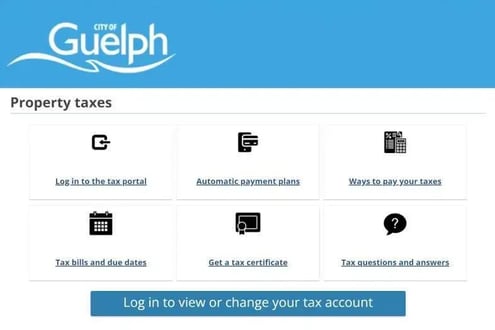
Municipalities are modernizing as well. The City of Guelph launched an online property tax portal, addressing a common gap in local government payment infrastructure. By enabling digital access to routine transactions, the city improved convenience for residents while reducing administrative burden.
These examples reflect a broader trend. Governments are beginning to view payments as a strategic layer of service delivery. The opportunity now is to extend this momentum, moving from isolated improvements to coordinated, scalable modernization across programs.
Modern Payments as Public Infrastructure
Payments are one of the most frequent interactions between governments and citizens. When the infrastructure behind them is modern, agencies reduce administrative costs, improve access to funds, and strengthen transparency, all while winning over their citizens.
As digital adoption continues to rise across Canada, aligning public payment systems with how people already transact is both practical and strategic.
Digital Commerce Payments supports public sector organizations with secure electronic disbursements, prepaid card programs, and scalable payment infrastructure designed for high-volume environments. For agencies evaluating where to begin modernization efforts, payments are a measurable place to start.